
Rye fan? look no more, check out this great recipe!
Authentic German Pumpernickel Bread Recipe
It’s hard to find a good recipe for traditional German Pumpernickel so I thought I would try and fill this gap! Here is step-by-step guide to baking the real thing as well as some interesting Pumpernickel facts. Give this Pumpernickel bread recipe a go – you won’t be disappointed!
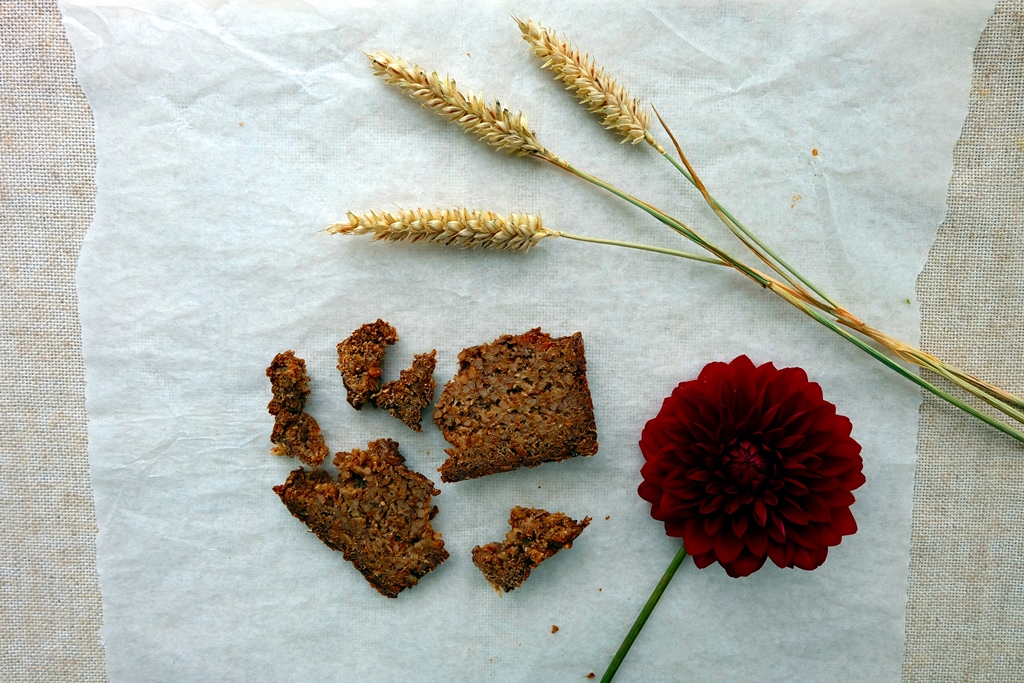
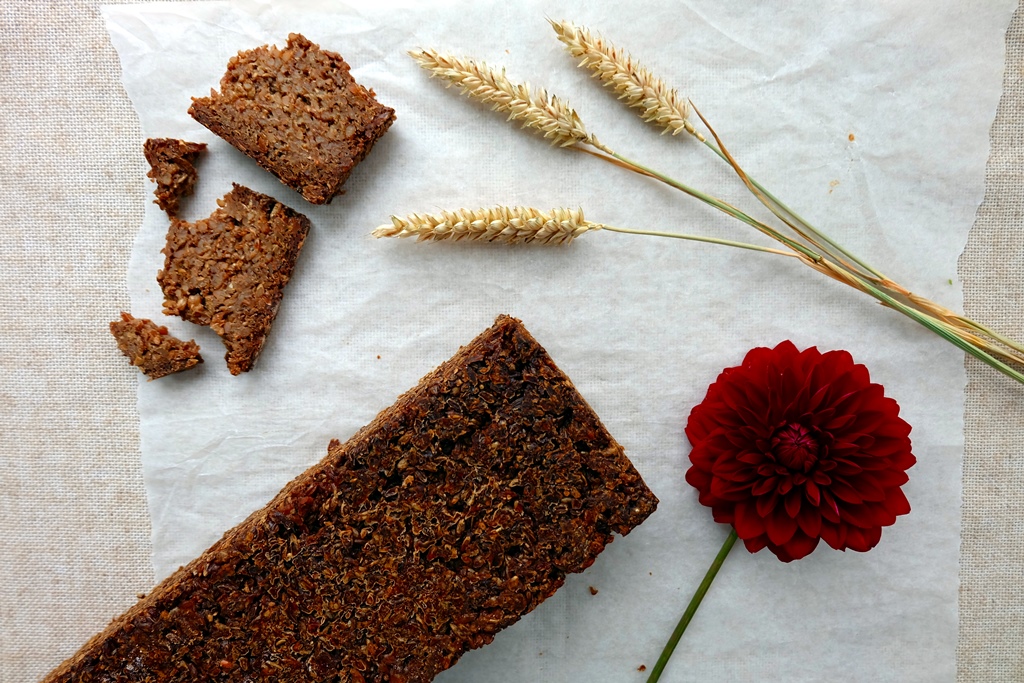
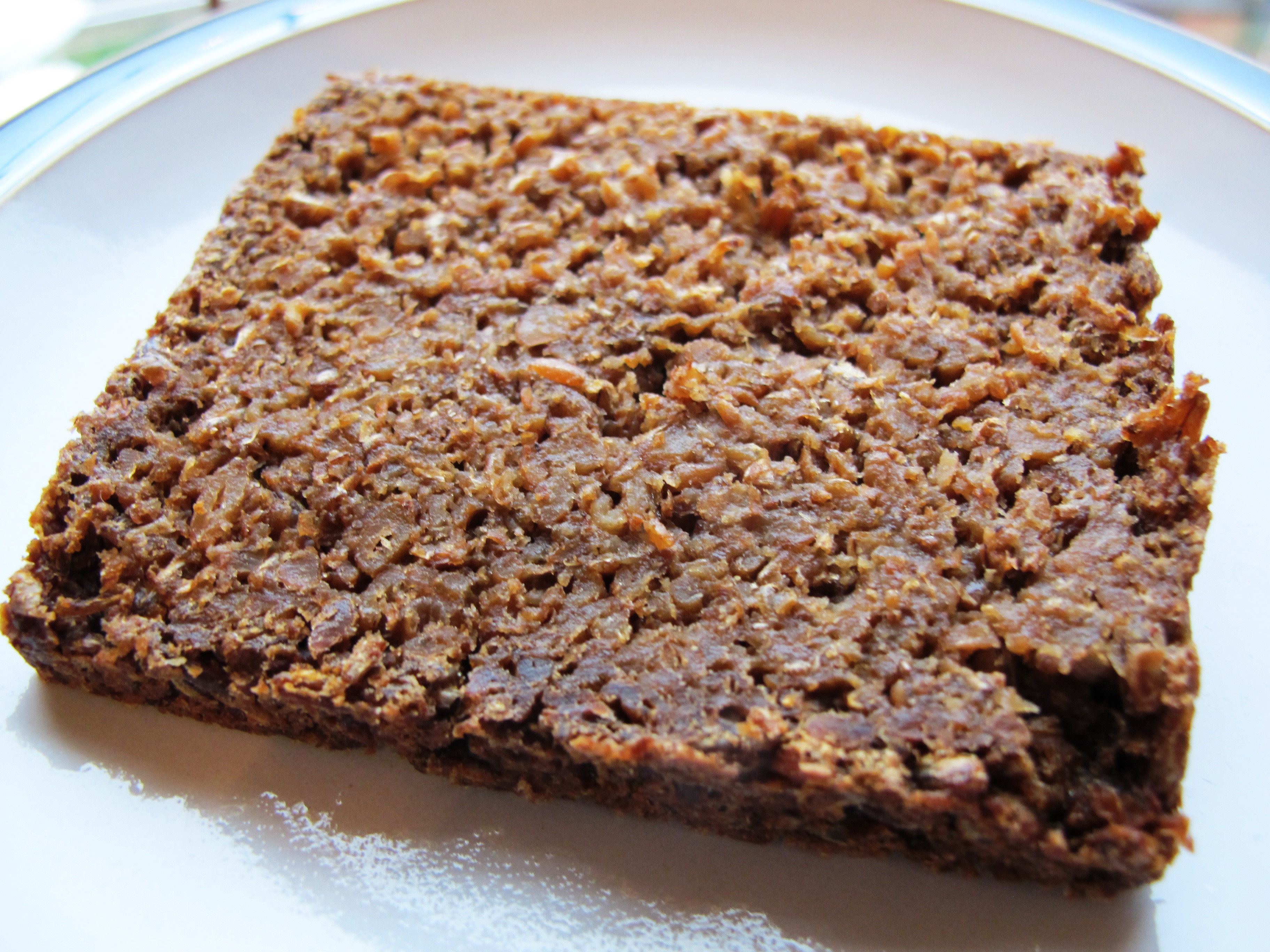
What is Real German Pumpernickel?
- 100% rye bread (only whole rye grain and cracked rye is used for the dough, no milled flour – Pumpernickel has humble origins and for a long time it used to be peasant fare for people with no access to a proper mill)
- Pumpernickel has a rich dark-brown colour, but no crust (it’s baked in fully covered baking tins)
- A very heavy bread with a unique sweet aroma and earthy taste (rye has 7% natural fruit sugar, compared to wheat at 4%, which caramelises during the bake)
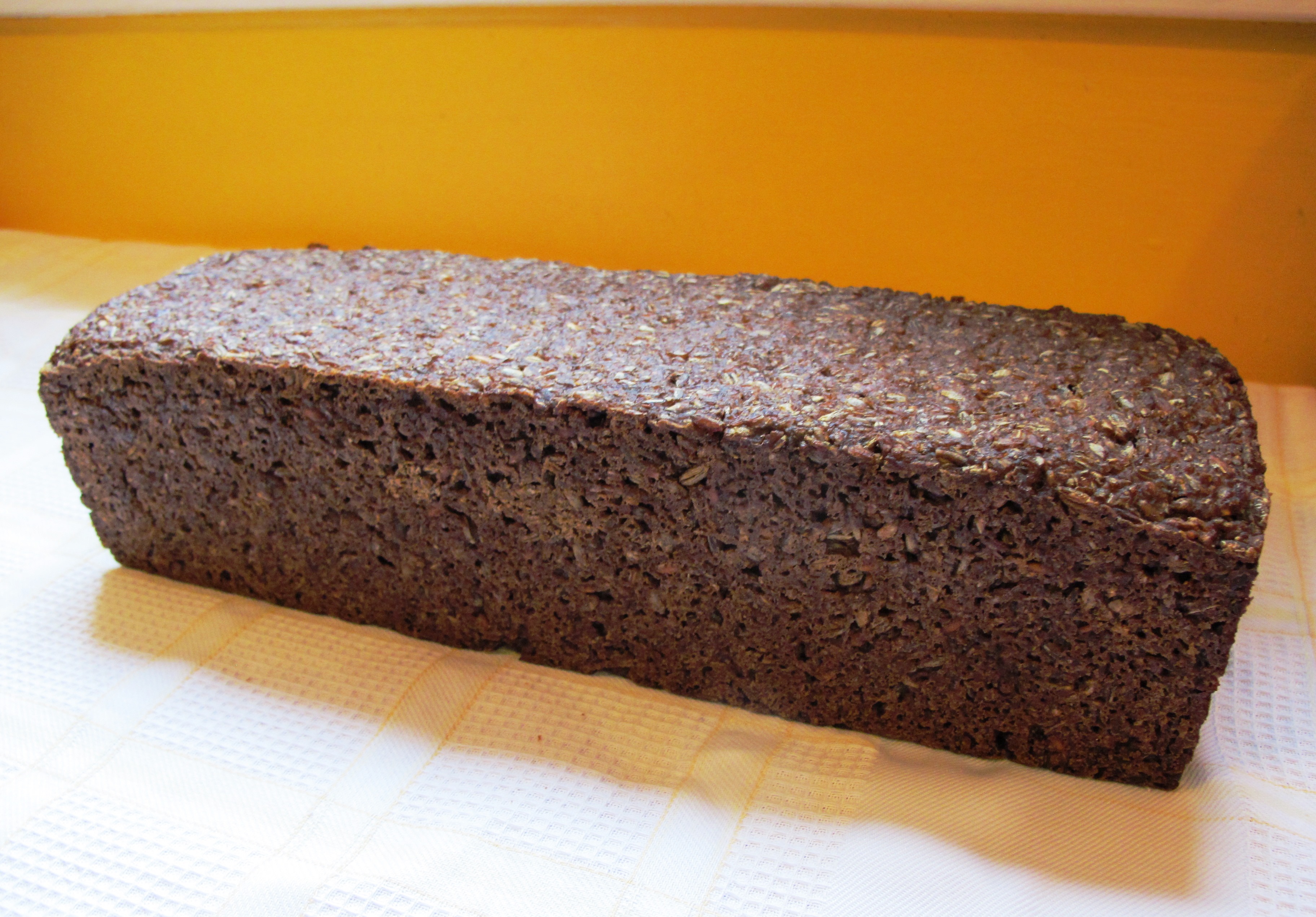
How to make traditional German Pumpernickel?
- All you need is a rye sourdough starter, rye grains, cracked rye, salt, water and syrup.
- No colouring agent such as caramel colour is added.
- The characteristic dark colour is achieved through a very long baking period (about 14 hours in a low temperature of around 120°C) and caramelising fruit sugars.
- In this process it’s important that the steam doesn’t escape – otherwise the bread will completely dehydrate during the long bake. The moisture can be retained by wrapping your baking tin with a few layers of tin foil. However, I invested in a large Pullman pan, a loaf tin with a lid that slides on top to keep the loaf entirely contained. I still wrap a layer of tin foil around to be doubly sure.
- The bread should mature at least 24 hours before cutting to allow the crumb to fully develop (all-rye breads tend to otherwise gum up due to the high percentage of pentosans)
Is Pumpernickel healthy?
- Yes, the starches of real Pumpernickel have undergone so much of a transformation that they are quite easily digested (source: “Bread: A Baker’s Book of Techniques and Recipes” by Jeffrey Hamelman)
- Whole-grain rye contains nearly 15% fibre
- Pumpernickel also has a low glycemic index (less likely to increase in your blood sugar level)
Where to buy Pumpernickel ingredients?
- Organic rye grains (also called rye berries or kernels) from health food stores like Real Foods
- Organic cracked (or chopped) rye and rye flours directly from the mill e.g. Shipton Mill. While Shipton Mill produces coarse cracked rye, I like to mix this up with fine cracked rye by The Prior’s Flour.
- Both Real Foods and Bakery Bits ship worldwide
Important Note
If you can only find coarsely cracked rye, it is highly advisable that this is mixed 50/50 with wholemeal rye flour. You will otherwise find it difficult to form a dough that sticks together. Since using a grain mill (Fidibus Medium flour mill) to mill my own flour at home, it’s been really easy to achieve the right coarseness of cracked rye (I set the dial to medium between fine and coarse), so if you do have a mill at home, it’s going to be really great for this recipe.
Kommentare
0 Kommentare
Bitte melden Sie sich an, um einen Kommentar zu hinterlassen.